
Animal Management

Perhaps the most used image for the role of the so-called “pastor” in the Bible is that of a shepherd. And shepherds shepherd. They care for the sheep, feed the sheep, guide the sheep, watch out for the sheep, search for the sheep, and perhaps even lay down their lives for the sheep. I think when people become pastors, this image of caring, preaching, warning, and checking in on people comes to mind. Even in Acts, Peter and the other apostles were to give their attention to prayer and teaching…not waiting on tables. So, initially in my mind, this priority of the pastor was strong in my mind…I didn’t think that other aspects of balancing and planning was all that “Biblical”. I felt (and perhaps still do feel to an extent) that all this talk about management and resources and vision casting…was just some kind of cross pollution from the business sector. Of course I still thought that the business world can teach us a lot, but I also felt that leaning too hard into that comes less from necessity and more from pastors looking on and longing to be part of that scene.

But, I think recently I’ve come to understand that management cannot be avoided in pastoring. For example, in Acts, even though Peter and the other apostles appointed deacons to focus in on the other work…the thinking about the problem (people in the churches are not being cared for and the apostles are being spent), coming up with a solution to the problem (increasing the number of people who will work and giving them specific duties), and actually going through and putting the plan into action (finding out people who qualify, explaining what their duties will be). All of these actions seem to be a part of the pastorate.

Thinking back to the sheep example, shepherds are not just to protect the sheep but probably also need to know the lay of the land, where there are good places to be fed, and how to make sure that all the sheep are actually fed. They need to know not just the sheep, but the environment as well. If there are too many sheep, they need to think about the next steps so that all the sheep are provided for (hiring workers under them…perhaps creating another separate flock….). Thinking through these issues, while not directly part of the praying and preaching…still seem to be intrinsically linked to pastoring.

And shepherds generally don’t deal with abstract ideas, but the reality of the sheep. There might be the ideal “sheep”, but to the shepherd, what matters is each sheep before them…knowing their call/voice, and taking time to go after the ones that wander as well…however far or long it might be.

In short, management seems to be a part of the pastorate. And so as a pastor, this is an area to grow in.


One reason why people leave Christ…

I vowed (3days ago) that I would write everyday for a year and so I am compelled to write. Today I spoke from John 6:1-15 at my church and focused in at the last point, mainly that the people who were following Jesus had wanted to make Him king, but Jesus didn’t want to have anything to do with that. This brings up all sorts of questions, but it also gives greater clarity into Jesus’ own ministry as well as the nature of the fickle followers that were around him (of which we may find ourselves to be part of as well! lest we aren’t careful).

So the people wanted for Jesus to be king, but their idea of “king” and Jesus idea of “king” were quite different. They wanted, probably, independence from the rule of Rome and Jesus would be very helpful in accomplishing this goal that the people had. Their idea of a king was not only a person who worked for their benefit (healed the sick, feeding of the 5000) but also someone who fought the battles they wanted to fight. We see this a lot with popular figures in the media. There might be a famous singer or artist that happens to hold similar views as we do…and we immediately hoist them out in front of us to be our spokesperson or what not. And if a person doesn’t end up falling in line with all of our nuances and views, then we quickly cast them out. The people liked Jesus in as far as He was in agreement with them. They wanted Him king, but they’re kind of king. But any person who at the outset has a list of qualifications which their king must meet and follow…does not want a real king. They want perhaps a secretary or servant…or maybe they want a representative. Not a king.

But Jesus wasn’t the king they wanted him to be. Jesus knew this and so distanced Himself from them. I think this also explains why so often Jesus was secretive and quiet about a lot of His work (especially in the Gospel of Mark). People had their understanding of Messiah or “Christ”, but Jesus’ understanding and mission was quite different. So Jesus made sure not to cause confusion or get caught up in currents that would take Him away from the true mission.

Jesus wasn’t the king that these people wanted and so later in verse 66 of the same chapter, almost everyone leaves. If Jesus isn’t on board with our ideas, our values, then we so often quickly avoid Him, or distance ourselves from Him. Even in church work, this has a way of working out. Here are some of my personal notes on this…

SO, what about me?  When I read this passage, how will it change me and work in me?  I will often times want Jesus to do things for me.  Perhaps as a pastor, I want Him to give me numbers and easy success.  I want Him to work in the hearts of people in a way that is beneficial towards my own image.  I don’t always want to come to Jesus on His terms, but I care a great deal about myself and want Jesus to give me the things that would allow me to trust in myself.  And so from this, the question that comes is, “what does it really mean to follow Jesus”?  It involves a lot of letting go of unhealthy or distorted desires and letting Jesus come in and be number one.  For me, I suppose there is a desire for signs that I am doing a good job.  I want visible signs of success.  And the absence of trouble.  I want people to like me and to think good of me.  I desire respect from people more than other things…I often struggle with feelings of being disrespected.  And so, I wish that in following Jesus, these things would come.  In a sense, I desire Jesus to guide me on roads that would result in greater respect for me, rather than roads that would mean less respect for me yet greater respect for Christ. 

In other words, if God’s glory would be apparent through my own glory, I am happy to have Him as my Lord. But if God’s glory would come through my humility, my failure, my “becoming nothing in the eyes of others (especially fellow pastors)” then I, like the crowd, might find myself distancing myself away from Jesus.

I want to be king. That is the heart of the problem (and probably is the heart of most problems). But even before I am called to take off my own crown and lay it before Him, He has already cast off His crown and humbled Himself to the point of the cross…so that I might be exalted. Knowing this, that my God went so far for me, I might then take the first step of response to His grace and entrust not just one part, but all of me for Him.

The heavy weight of Japanese Christianity

So, I have to say beforehand that part of this blog is to present ideas that are still works in progress (maybe all of our ideas are works in progress….). But I want to say this beforehand because when I make some comments about this or that…I’m still sometimes fleshing out ideas and not coming to conclusions. And to avoid backlash, I want to say that now is such a time.

Failure in Japan is not tolerated as much as it is in the states. I know I still need to read up on this more, but there is less tolerance for mistakes and more condemnation for people who slip up on the job. The positive outcome is that orders at McDonald’s are 98.9% accurate. The downside is the pressure to go on without mistakes is so great that many people just give up on life (through various methods). Quality in Japan is so high, and so work in the church also takes on much the same mindset. From talking with various elderly pastors, it seems the rule of quality in society is set against the job of the church (and usually in context, the pastor I’m talking with is speaking down about other leaders and churches that tolerate low quality work). Now, there is truth to these statements (there is always truth in any statement!), but the times and places I’ve heard this makes me worry that the church will often take the rule of society and hold that to be the rule of the church. This I think causes the church to be less the church and more just another form of secular society with religious ideas.

For example, the numbers of church goers is getting smaller (as of 2025) and I am in a meeting with many church leaders. Things aren’t going as planned, numbers aren’t as great as we hope and, even though people are working with no sabbath nor rest…the resounding call is for us to all repent. In other words, the result (small numbers) must be the result of our laziness or lack of work. It is due to human error and can be corrected if people just put in more time and effort. Now, I don’t think anyone there would state things in such a way, but the resounding understanding of success and failure is not so much “faithfulness to God”, which is quite hard to measure, but numbers, results and quality. There is an assumption that if a person is faithful, God will give the numbers. If a person is a true Christian, God is bound to bless.

On the flip side, this means that churches with small numbers, churches that struggle in harsh environments…are ultimately not faithful and the pastors are just doing shoddy work. Failure means both shame before people and in a sense and shame before God. Perhaps a person gets fired from a job and its hard enough, but for a pastor who doesn’t “succeed”, there is no place to go since they are, in a sense, shoddy in their work for people and in their faith towards God. Or at least that is how things can be spun given the prior logic of effort and result. I think this makes the pastoral work of Japan all the more dangerous and even tragic. God is no longer loving, but becomes almost like an unforgiving and unrelenting boss. Sure there was grace given at the outset, but now He becomes the boss with arms folded and head shaking in disapproval…without tangible results, we then become the disappointment of God.

While I admire the passion, and perhaps humility in repentant attitudes…I worry if a person who repents when there is nothing to repent of…if that action is indirectly claiming that all things are up to the responsibility of the person. In a sense, we think that we are in control. Is there any room for God’s plan in this emphasis on works and results? He seems to be absent, or rather, only mechanically pouring out or withholding with result to the quality of our work. So then, are these attitudes humble? Or are we still hanging on to karma and causation found in Buddhism. Because in Japan, if something goes wrong somewhere, you can be sure that it is someone’s fault. Perhaps we have imported this into the church…and this does not help the church but hurts it.

Well, at least that is my hypothesis right now. But I might be coming from a Western perspective where Christianity has been the majority…and I simply haven’t known what it is like to be in the hard pressed situations where the Christian population is negligible. But one other consideration gives rise to caution within me against the sentiment I’ve been talking about. Japan has had historically low percentages of Christians…while other surrounding countries (Philippines, Korea and even China) have had much stronger numbers of Christians. Using the prior logic, then we would have to conclude that all other countries besides Japan have been more faithful and done longer and better work. But that isn’t true. There have been so many faithful pastors and Christians, even facing some of the fiercest persecution…so maybe we should reconsider some of these cause and effect attitudes and have a stronger sense of God’s centrality over the harvest. That might be the greatest step we can take…it might seem like a step back as we turn to relax rather than hunker down and sacrifice ourselves “for the kingdom”…but perhaps this step back is a step of faith and an admission that we cannot control God through our effort. (and again, it is hard to say, because perhaps this thought comes as a result of wanting to just “take it easy”…it would be good for others to give their insight.

Blog posts about writing blog posts are a bad idea

So instead, I propose to write about a blog post that came to life and went on their computer and typed out a blog post. Thus it would no longer be a “a blog post about writing a blog post”, but rather “a blog post writing about blog posts”. This is much more interesting (though a waste of anyone’s time equally).

Anyhow, I need to write. This is something that has been nagging at me for years but I have been putting it off. What reasons are there for someone like me to write? And post it in the blog format? This has been done so much (and therefore I have little hope that anyone would read what I write). But there are things that I want to flesh out in writing for myself and the people of my church. There are books I’d like to introduce to people I know. Writing helps me sort things out in my mind. I majored in creative writing in college?

But there are some things that are unique to my situation that I can probably leverage a little bit, and perhaps would provide a somewhat unique outlook. I am a pastor of a Japanese church. I’ve lived in Japan for 16 years without returning to the states much at all. 日本語でもブログを書ける。My interests also range from progressive rock to Japanese novels, to video games and their soundtracks.

All of this together would make for a very disjointed blog. But perhaps by keetping Christ at the center, or foundation, even if in many cases unstated and implicit, things will be both tied together and beneficial. So, the next step is to be be consistent. To write everyday. To see if this goes anywhere. Well, let’s try this for a year then. Here we go.

Lost Horizons and Gin Blossoms

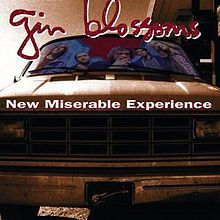
My favorite song by the band Gin Blossoms is “Lost Horizons”.  I think that its appeal lies in the power of a heart laid bare in the lyrics by Doug Hopkins.  It moves through three situations, each moving from the outside in.  Starting with the locale full of bars and factories, the lyrics go on “I’d drink enough of anything to make this world look new again”.  The next move is towards people, that the girl and his relationship has lost its life and purpose.  She has nothing to say, so she says “i love you” and even these words are empty…so the lyrics go on “I’d drink enough of anything to make this girl look new again.”  And then finally we go to the failures and weakness of the speaker.  “I’d never thought i’d still be here today”.  It describes hopes that never came to fruition.  Plans that were never carried out.  Everything seems so stillborn about his life.  And so we hear the final words “I’d drink enough of anything, to make myself look new again”.

What’s desired is for redemption, for the world, for the people, for himself to be new.  But how does one make new what has become old.  There is alcohol that makes things look different for an instant, but it is a trick.  If there was some kind of drink, potion, that would make things permanently look new, that’d I’d drink!  But there is no such thing, no pill, no antidote and no hope…things remain gray, washed out and fading.

Its the honesty with the yearning for redemption.  And, personally, I do think there is redemption in Jesus, not to sound cliche.  But the honesty of the plight is profound and i tend to think that whether we admit it or not, we all feel these things at some point.  We need redemption.  Hopkins’ tragedy as many people might already know, was that his alcoholism brought all kinds of self destructive events, leading to a kind of abandonment by his band mates in favor of being accepted by a major label (the deal was either Hopkins is out or no deal), subsequent success by the band post-Hopkins, all with the songs he wrote giving the band success and hit singles, and then a gold record sent in the mail from them…he went on to smash the record and then committed suicide later.

Knowing that tragedy, it makes me hear Hopkins’ words clearer and then makes me want to shout out to him…that he can be made new… in Christ.

Porcupine Tree and Religion

With the recent release of Steven Wilson’s (Aka Porcupine Tree, Blackfield) latest solo album, I took some time to do a little searching via old interviews (via wikipedia…).  I confirmed a few things i had felt via lyrics coming from Porcupine tree that Wilson doesn’t like organized religion, but that he doesn’t necessarily shut out spirituality (defined in an Atheistic framework) completely.  Through songs like Lazarus and Prodigal, there seems to be echoes of themes from stories found in the Gospels.  Especially the calling of Lazarus from the grave found in John.

These lyrics were never endorsements, but sharing some themes, I at least felt that Wilson perhaps appreciated “truth” behind some of the stories, but “truth” as not fact, but as something true in the sense that it speaks to the human heart…

So, finding Steven Wilson to be an Atheist never struck me as odd and he also doesn’t seem to be in attack mode regarding religion, but he does seem to think it to be nonsense…and obviously so.  He then goes on to talk about the New Testament being written 200-300 years after the fact by governments/systems of power.  And these comments I think both surprised me and disappointed me.  I think I had expected more understanding regardless of his conclusions, but he seems to accept this narrative that I’ve heard thrown around here and there.  It is that the New Testament was written really late, far after the events around Jesus’ life.  But what strikes me strange is that no scholars, Atheist or Christian or Muslim, would ever date the Gospels so late as the dates often thrown around by people like Wilson.  I wonder where these dates come from and I also wonder why they are accepted so naturally.

Listening to the music and lyrics written down by Wilson, I often find myself nodding along with his views and insights and had considered him (and still do to an extent) a very deep and thoughtful person.  But his comments made me remember that a person can be an expert in one field but ignorant in other areas.  A person can be deep in some areas of life, but shallow on other fronts.  Because a person is an expert scientist does not give them authority surrounding history.  Because a person is a great historian and knows so much about a place and time, it does not necessarily mean they will then be a well-trained sociologist or even know a thing about history in Asia or other areas out of their field.

But we often come with expectations that movie stars are well-informed about global politics and musicians will be deep philosophically.  But, of course not!  Neither are we experts in all trades.  But we sometimes make the mistake of listening a little too much to people who really don’t know too much.

And again, the last thing that i often notice is that people discount religion on account of it being intellectually absurd, but they often do while giving out information to back their case that is verifiably incorrect.  And so while they come to the issue under the mantle of knowledge and intellectual integrity and realism…often it comes from a narrative that they have been fed…it comes from faith.

Skyrim and Getting Lost

So, I had a bit of time to myself last night and decided to play some Skyrim on PS3.  Such a great game.  I realize that it’s much easier to lose track of time/ play too much with rpgs versus platformers like Mario.  Mario, I’ll pick up for 30 minutes to an hour and be satisfied and done.  But rpgs bring in this addictive nature of wanting to complete as well as wanting to see what’s around the next corner.  There is something very human about wanting to tie lose ends together and being reluctant to quit until things are settled.  I think games like Skyrim pull the player in with this element.  When I finish a quest, I don’t just finish it, but I want to go back to town and make sure everything is resolved, my items are put away safely and everything is neat and tidy.  But the game doesn’t really allow that because it’ll make sure that on the way back to town I’ll meet a dragon, get pulled into another quest or witness a fight in a market that, again, pulls me in so that I can get things resolved.

So anyways, great game and does speak to our human nature (its a very human game).  I suppose the one danger is that if Skyrim becomes the preferred residence of us and the Earth is simply background noise.  Games should be for leisure and relaxation, but sometimes that non-risk environment is what we crave for and we end up abandoning ship on our careers, friends and family and live our lives out in the game.  Which is a shame.

A few scattered thoughts on Chu Shingura

I was reading part of Chu Shingura today and I wanted to revive my writing habits.  I remembered that a few years ago I had a blog created, and so, now I return to improve my “accountability” for writing.  So, what made me want to write were some of the Confucius ethics that I find in many of these plays (the dealing with many complicated relationships that come into conflict with one another where the main characters are brought to a point where they must suffer loss).  Here the story revolves around a brothel house.  A father has sold his daughter (who is already married) to a brothel without the husband’s knowledge.  And so a promise was made that was I think in slight violation of the relationship between husband and wife which becomes some what more prioritized than parent-child after marriage (according to Arai Hakuseki).

But here is what struck me.  There is a brothel where women are being put into a sex-slave industry (an evil), yet the values or rules of the Confucius system of honor protects the evil industry.  The fact that there turns out to be so much conflict and so much sorrow, I think, points to the fact that there cannot simply be “a way” without a “foundation”.  The Confucius system describes how one ought to prioritize each relationship, but what is the base from which these relationships are weighed and established?  From where do these bonds come and how is the strength of each bond determined?

So, I first want to admit that I do not know enough about Confucianism to make too many judgments.  This is something that would be interesting to explore…what are the foundations for Confucianism?  But, I also come away from stories like this where wrong is done and no one seems to be able to stand up against that which is wrong because of a system that freezes everyone.  I write this as a Christian, so I believe in ‘good’ and ‘evil’.  But when our societal systems have some faults in the foundation, many times the oppressors are protected and the oppressed are without hope, unless they have a hope that comes from without the system.  Thus hope in the Creator, though looked down upon in a Confucian setting, protects from such abuses (or rather, helps people from subjecting themselves to such abuses).  The downside is that they will then have to bear shame from the community for their lives, but, did not Christ also bear our shame in carrying the cross?  We, by following the cross, die in shame, but we also live freely.

so…

I decided to make a blog that no one will read.  But at least this might encourage me to write more.

So…here is the plan.  I’m going to write about theology and culture (namely Japanese/American) as well as about whatever books I read, games I play, music I listen to.  I don’t want this to become an end in of itself, but a means to help me write more and thus perhaps process more of what I intake.  I started reviewing books without publishing the reviews anywhere just as a means of thinking deeper about what I read, and this blog is to futher that line of thinking.

If I can, I’ll update it about once a week, reviewing a book, album, or game…and perhaps also let a thought run its course in writing.

Well, enough for one day….the end.